East of Ubud – Tenganan, Tirta Gangga, Goa Lawah, Kerta Gosa
January 13, 2016
Another day of exploring Bali. This time we headed east.
The first stop was the village Tenganan, one of two where indigenous Bali people live. I'd heard it was a commercial place, so I didn't have high hopes of seeing real Balinese life and a traditional village. However, I was very pleasantly surprised. Yes, tourists come here, but not in droves; I think I saw three of them. It's also true that locals try to sell their wares, but there are no stalls or shops here, and they're not pushy, and you really get a glimpse of how these people live their daily lives.


Upon arrival, they ask you to sign the guest book (name, country) and make a donation, which is also recorded in the book. This is helpful; I wouldn't have known how much I should have given, so I glanced at the previous entries. I gave 20,000 IDR, which I consider a reasonable amount for both parties. As part of this, we were given a guide, a villager. The guide isn't optional, which is understandable; I also wouldn't want tourists wandering around my property. Kadek explained that the village is home to about 750 people, forming 250 families. First, he took us to his home, where we could witness his wife making ikat gringsing. It's a handmade fabric. First, they grow and harvest the cotton themselves, then process it into threads. These threads are then dyed with natural dyes, which can take years to produce (or "ripen"). Balinese women use a traditional loom to create ikat. It's very time-consuming; creating a single ikat, the size of a scarf, takes several months. I didn't even have the courage to ask about the price, but I think this event is only for the wealthy. They also sell cheaper fabrics, such as silk or batik scarves. However, the prices are higher than in the markets. I'm not an expert in this field, and I don't know if I'm buying better quality or simply at a different price, so I decided against it.


It turned out that not only his wife was talented, but Kadek himself was as well. He showed us the technique of making lontars and his products. These are inscriptions carved into processed palm leaves. The first step is preparing the "paper." Not every leaf is suitable, and the selected ones are dried in the sun. Then they are soaked for three days to remove the chlorophyll, then dyed, cleaned, and dried again. The paper preparation alone takes over six months.
And that's just the beginning! The next step is making the inscription. It can be text or a drawing. A special "pen" with a sharp metal tip is used for this. It's a very meticulous job. And there's no eraser; one mistake is enough. This time, I decided to invest and bought a lontar depicting a Barong. Besides lontars, Kadek also makes masks, figurines, and other souvenirs. What I liked about it was that he didn't pressure me, didn't pressure me, didn't pressure me. I bought the lontar because I really liked it; my friend wouldn't let him earn any money, and despite that, his behavior towards her didn't change. He remained very friendly and eager to talk.


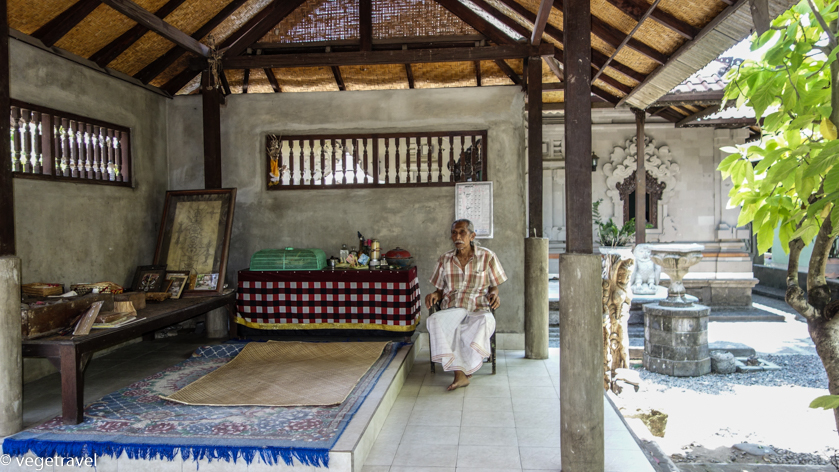
After visiting his house, we went for a walk around the town. Time seemed to have stood still here. The houses have no running water, and they have to walk to the spring every morning. There are no satellite dishes, no cars, and the ubiquitous Coca-Cola. Apparently, there are no privately owned houses here; they belong to the community.
Until recently, villagers were prohibited from marrying outsiders, and if they did, they were excluded from the community. However, they began to experience problems with their birth rate and realized they needed "new blood." Therefore, it is now permissible to marry someone from outside the village.


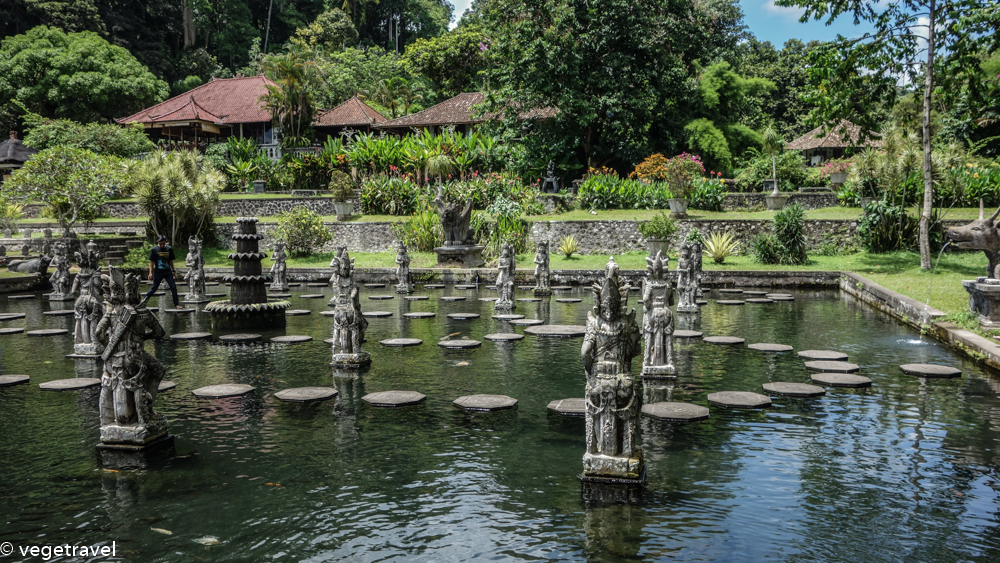
The next stop was a beautiful palace on the water – Tirta Gangga. Relatively new, it was built in 1948 by King Anak Agung Anglurah Ketut Karangasem. Interestingly, the king was not only the architect of the gardens but also worked on their construction, alongside workers from lower castes.
It's worth spending an hour here, wandering around the park, and jumping down the stone steps into the pond. There are also some interesting sculptures nearby. Honestly, I don't know what they mean or who they represent, but they had skulls and were scary, so I liked them.


Not far from Tirta Gangga lies another water palace, Ujung. This one, too, was built not so long ago, in 1919. The palace once served as a prison for practitioners of black magic. Unfortunately, I didn't make it to this place. The friend I was traveling with had a hard time making decisions and sticking to them. My carefully laid plan fell apart when she suddenly started wanting to hit the beaches. I preferred sightseeing, but that day I made a concession and we drove her to the beach, at the price of this palace.
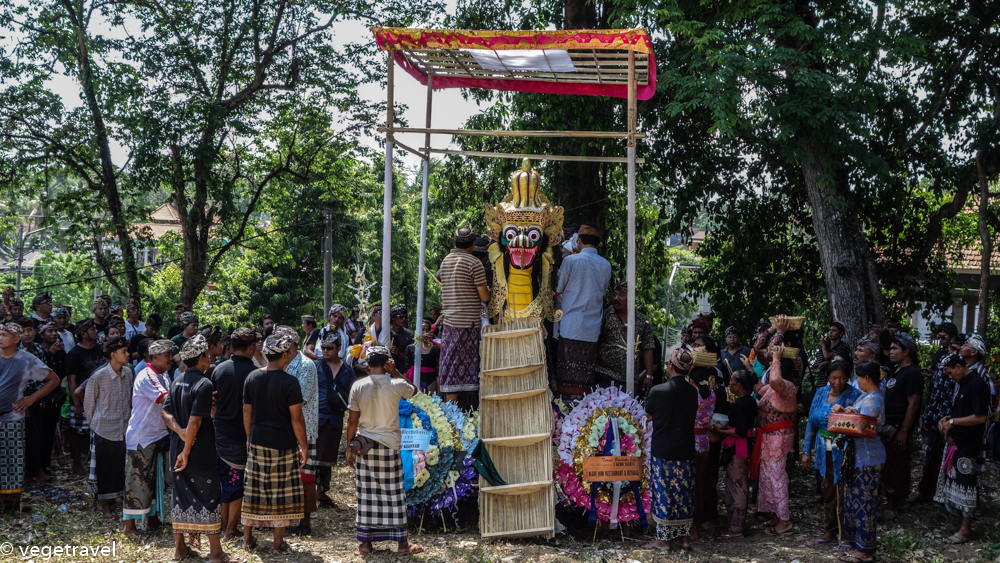
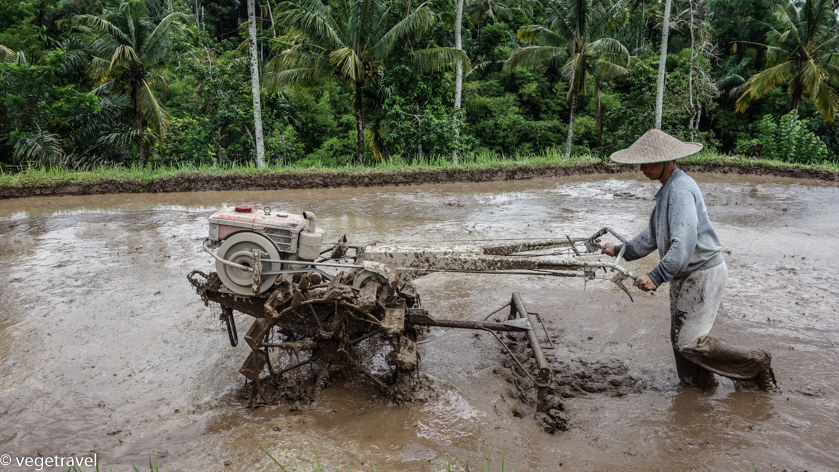
On the way to the beach, we passed rice fields, traditional villages, and a cemetery that intrigued me. Maybe it wasn't so much the cemetery, but the umbrellas over the graves. I asked our Balinese driver what that meant. It turned out it was their way of showing respect to the deceased, and a sign that they were caring for them after death. The umbrella was meant to protect them from the sun. I decided to get off a little early, walk around, and take some photos; the driver was supposed to pick me up after dropping my friend off at the beach. Imagine my surprise when they both showed up. My friend, however, said the return trip alone was too expensive and was going with us. Grrrr


Oh well, I had to survive without following my plan in 100%. There were two more attractions left that day. The first was the temple Goa Lawah, or the Temple of a Thousand Draculas. It was built in the 11th century by Mpu Kuturan, who is said to have pioneered Hinduism in Bali.
The temple didn't make much of an impression on me until I saw THEM. Hundreds, thousands of them! There's a cave on the grounds where bats live. You can't enter it, but as lovely as they are, they can carry dangerous diseases. Apparently, if there's rabies among them, in the small space of a cave, and with the high concentration of "fumes," you could contract rabies by inhaling the air. I don't know how real the risk is, but I preferred not to experiment.


The last stop was the palace complex Kerta Gosa Klungkung , built in 1686. Only fragments have survived to this day, including the main gate, the floating pavilion, and the Pavilion of Peace and Prosperity. Perhaps the most representative part of the structure is the ceiling, depicting the story of the Javanese epic, Sutasoma.
It was another hectic day, but it was a bit of a gamble. Unfortunately, it might seem like Bali is small and everything is close. Indeed, Bali is small, but it also has narrow roads and traffic jams. Public transportation is poor; locals rely on scooters, while tourists rely on minibuses or rented cars with drivers, which are the cause of the traffic jams. The next day promised to be very interesting, but more on that in the next installment.