Volunteering with orangutans, practical information
I'll be honest, I didn't know much about Malaysia; I always associated it with Borneo and orangutans. That's exactly why I became interested in the country.
I've always been crazy about animals; I think I got it from my mother, a biologist and animal lover. I don't know why I chose orangutans, but they've always been my fondest love, and I wanted to get to know them better.
Life turned out to be such that I became a boring corporate employee, but I couldn't stop thinking about my orangutans. Once, while at a job fair in London, a representative of a company that organizes volunteer work, including with orangutans, was there. My enthusiasm cooled somewhat when I saw the amount of money involved. Not only was there no salary, but the opportunity to work was also a hefty price tag. I shelved the idea, but I didn't forget about it.
A few years later, an opportunity arose. I had savings, had quit my job, and had time. I decided to go to the orangutans. Initially, I hoped I could find volunteer work without expensive intermediaries. I searched for people connected to orangutans on LinkedIn, emailed them, and wrote to orangutan rehabilitation centers. Unfortunately, they all referred me to intermediaries. I gave up. Another cold shoulder came when I learned that there was no direct contact with orangutans; they prepared food, cleaned, repaired, and built, and observed from afar. And how I longed to touch an orangutan! I didn't give up. I searched and searched, until I found it! The only project that allows direct contact with the little orange people!
I came to my first program in November 2016. I'll never forget the feeling when I saw an orangutan for the first time; I almost cried with joy. I enjoyed the program so much that I came back at the beginning of January 2017. I don't consider my second visit as successful as the first. Why? It all depends on the people. The previous group was disciplined and knew why they were there; their main goal was to help the orangutans. Everyone would have loved to hug the orangutan, but they didn't, knowing it would be a step backward in the orangutan rehabilitation process. Everyone also took their responsibilities seriously.
The local staff are fantastic, super kind people with big hearts. They do wonderful, hard work. I can honestly say that the orangutans here receive the best possible care. If anyone would like to support the center, virtual orangutan adoptions are available. It's a great idea; I'm a virtual mom to Bidu-Bidu this year; last year I had Gelison. If you're interested, please visit the website below. You can also donate any amount.
https://www.orangutan-appeal.org.uk/adopt
My current group isn't as fantastic or disciplined; I won't go into detail here, but I think I'll apply for a different type of volunteering position next time. Sepilok collaborates with Orangutan Appeal UK, and they have a volunteer position that promotes and sells virtual adoptions, acts as a liaison between Sepilok and England, takes photos that are later posted on Facebook, and so on. Volunteering typically lasts four months (but apparently can be extended). Volunteers are provided with accommodation and receive a small living allowance.
The job is very responsible and not for everyone, so I'm a little worried about whether I can handle it. It's good to have experience in sales and public speaking. Every day, you have to give a short lecture about orangutans, and then you're welcome to chat with tourists, talk about orangutans, and encourage virtual adoptions. It's a big challenge, but you know you can REALLY do something good to support these wonderful creatures.
PRACTICAL INFORMATION
The company that organizes this is called Travelers Worldwide.
https://www.travellersworldwide.com/
The center where the project takes place is located in the Malaysian part of Borneo, in the Sabah region, near the city of Sandakan.
The Sepilok Orangutan Rehabilitation Centre has been rescuing orangutans for over 50 years. They primarily care for orphans, teaching them how to survive in the jungle, but they will not turn away any orangutan in need of help.
The program lasts 8 weeks, no shorter, no longer. Each time, 12 volunteers come, or rather, female volunteers, because it's usually a women's camp :) Mostly from the UK and Australia, but there are also a few people from the Netherlands, Denmark, Germany, etc. Due to the costs, they tend to come from wealthy countries. I think I'm the second Polish person in history, I think, because they're not sure, they seem to remember that someone from Poland has been there once.
Before leaving, I had to have a set of vaccinations: Hep A and B, typhoid, tetanus, as well as present an X-ray of my lungs and a certificate stating that I did not have tuberculosis.
You need to buy insurance. I found a nice card option: Planeta Młodych, for 120 PLN insurance through Gotham, pretty good conditions, and they also insure against accidents while practicing extreme sports. What's more, the card and insurance are valid all year round!
The volunteering fee includes accommodation and meals, in double or triple rooms. Don't expect any luxury. It's a standard -1*. The food is tasty but monotonous, with various varieties of fried rice and fried noodles to choose from, plus a few dishes served with rice, and a few so-called Western dishes like cutlets, burgers, etc. I don't eat meat. After a while, you get sick of the food. There are a few places nearby to eat, but you have to pay out of pocket. My absolute favorite is Forest Edge Resort, 700 meters from the accommodation. It has fantastic food, delicious fruit juices, and no added water. You can ask the staff to make a tofu dish instead of chicken, even if it's not on the menu!
I must say there's a lot of free time. The first week is for acclimatization, and apparently, that's also how they check our health and whether we've brought any illnesses with us. During the program, we have two three-day breaks, two two-day breaks, and a few single days off. Our group of 12 is divided into three teams/rotations. We work with babies for six days, preschoolers for six days, and jungle trekking for six days. We have two such rotations each.
- Babies. We prepare milk and food, take them to the "playground," where we make sure they learn to climb trees and walk on ropes. We clean their cages. The little ones often have diarrhea, so cleaning is pure pleasure.
- Preschoolers. A group of slightly older orangutans whose playground is practically connected to the jungle. Wild orangutans are allowed to drop in, giving the preschoolers the opportunity to meet new individuals, learn from them, and overcome their own fear of them. Our responsibilities include preparing milk and food, cleaning the cages, and then making sure they play nicely on trees, ropes, or platforms. They shouldn't be allowed to play on the ground, especially in the mud, which they unfortunately love. These areas often harbor parasites, to which orangutans are susceptible.
- Jungle trekking. In the morning, we'll go into the jungle to burn some calories and look for orangutan nests to estimate the population. Yes, even though orangutans aren't birds, they build nests.
What we are not allowed to do! IMPORTANT . You're not allowed to use any cosmetics when working with orangutans. What's harmless to us can be harmful to them. Orangutans are curious, so they want to lick and touch everything. Therefore, deodorants, creams, and mosquito repellents are prohibited. The sun is blazing, but sunscreen is not allowed. However, you must wear gloves and a face mask. It's not very comfortable in such heat, but if necessary, you must. The exception is during rotations where we walk through the jungle, where you should even use mosquito repellent. You can also wear makeup if you don't want to scare the leeches in the jungle.
You're also not allowed to hug orangutans, pet them, or give them too much attention. Their greatest enemy is humans, so they can't get attached to us. After all, the center's goal is to release orangutans into the jungle. It's difficult; everyone would love to hug orangutans, but we're here to help, not for our own selfish reasons.
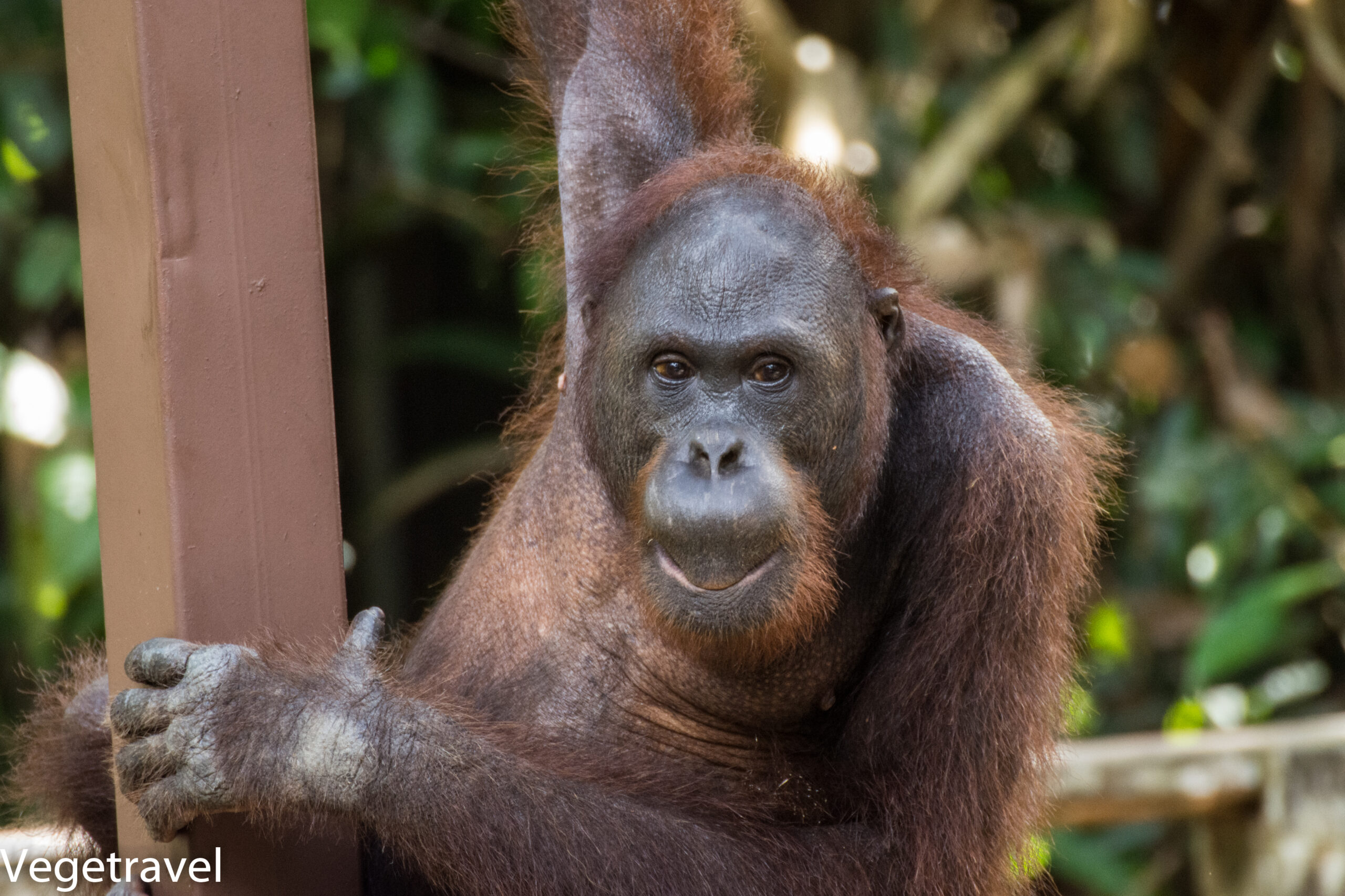
Taking photos of orangutans is prohibited; phones and cameras must be left at home. The exception is when walking in the jungle. There are several reasons for this, and this must be respected. On our days off, we can go to the viewing platform designated for tourists, in plain clothes, and we have the same rights and obligations as them. Then we can take as many photos as we want. All my photos of orangutans posted on this blog, Facebook, or Instagram are taken exclusively from these locations.